Marketing Plan
A marketing plan sets direction before a team fills a campaign tracker or schedules individual social posts.
What's Included
- Executive summary
- Objectives and measures
- Audience and positioning
- Key messages
- Channel strategy
- Campaign roadmap
- Budget and ownership
- Review cadence
Best For
Quarterly planning when the team needs a strategy before filling a campaign or social calendar.
Target Audience
Small businesses, consultants, agencies, and lean marketing teams planning a focused quarter.
How to Customize
Replace the illustrative audience, targets, budget, and campaign examples with your own evidence. Keep the plan short enough to review every week.
When to Use
Use this at the start of a quarter, launch, or focused growth effort. Use Marketing Campaign Tracker for initiative-level spend and results, and Social Media Calendar for individual platform posts.
Full Document Preview
Preview the actual editable ZuffSuite document.
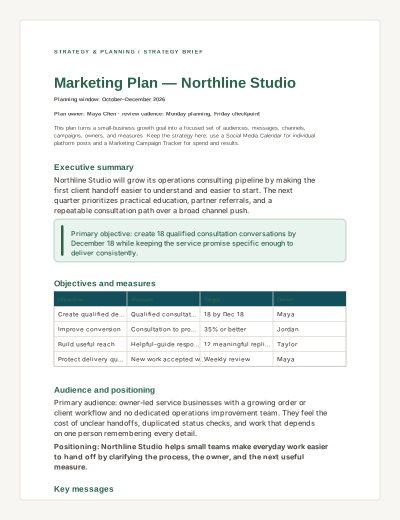
STRATEGY & PLANNING / STRATEGY BRIEF
Marketing Plan — Northline Studio
Planning window: October–December 2026
Plan owner: Maya Chen · review cadence: Monday planning, Friday checkpoint
This plan turns a small-business growth goal into a focused set of audiences, messages, channels, campaigns, owners, and measures. Keep the strategy here; use a Social Media Calendar for individual platform posts and a Marketing Campaign Tracker for spend and results.
Executive summary
Northline Studio will grow its operations consulting pipeline by making the first client handoff easier to understand and easier to start. The next quarter prioritizes practical education, partner referrals, and a repeatable consultation path over a broad channel push.
Primary objective: create 18 qualified consultation conversations by December 18 while keeping the service promise specific enough to deliver consistently.
Objectives and measures
Objective | Measure | Target | Owner |
|---|---|---|---|
Create qualified demand | Qualified consultation conversations | 18 by Dec 18 | Maya |
Improve conversion | Consultation to proposal rate | 35% or better | Jordan |
Build useful reach | Helpful-guide responses or referrals | 12 meaningful replies | Taylor |
Protect delivery quality | New work accepted within capacity | Weekly review | Maya |
Audience and positioning
Primary audience: owner-led service businesses with a growing order or client workflow and no dedicated operations improvement team. They feel the cost of unclear handoffs, duplicated status checks, and work that depends on one person remembering every detail.
Positioning: Northline Studio helps small teams make everyday work easier to hand off by clarifying the process, the owner, and the next useful measure.
Key messages
A process is easier to improve when the next handoff is visible.
Small teams can start with one workflow, one owner, and one review rhythm.
A useful operations plan explains what changes, who owns it, and how the team will know it helped.
Channel strategy
Channel | Role in the plan | Working format | Review signal |
|---|---|---|---|
Reach operators with practical examples | Short how-to posts and client-safe lessons | Saves, replies, and qualified profile visits | |
Nurture people who asked for a resource | One useful note with one next step | Replies and consultation requests | |
Partner referrals | Reach adjacent service providers | Co-written checklist or referral conversation | Introductions accepted |
Website | Explain the offer and capture intent | Workflow guide and consultation page | Completed inquiry |
Campaign roadmap
October — Publish the handoff guide, collect five operator conversations, and refine the consultation page from real questions.
November — Run a partner referral series and share two anonymized workflow examples with a clear consultation invitation.
December — Review the strongest message, close the quarter’s learning loop, and choose one repeatable offer for the next plan.
Budget and ownership
Workstream | Owner | Working budget | Decision rule |
|---|---|---|---|
Educational content | Taylor | $300 | Reuse only when it stays useful and accurate |
Partner materials | Jordan | $450 | Approve the audience and offer before production |
Small paid test | Maya | $750 | Pause if qualified conversations do not improve after review |
Review cadence and next actions
Monday: confirm the week’s one audience, one message, owner, and next action.
Friday: record activity, useful responses, qualified conversations, and one learning.
End of month: compare the target with the evidence and decide what to continue, adjust, or stop.
This is a planning document, not a guarantee of marketing results. Replace sample targets, budget, and claims with evidence appropriate to your business before sharing.
What this document is
A marketing plan is a structured document that connects a business goal to its audience, positioning, channels, actions, owners, budget, and measures.
When to use it
Use this at the start of a quarter, launch, or focused growth effort. Use Marketing Campaign Tracker for initiative-level spend and results, and Social Media Calendar for individual platform posts.
How to use this ZuffSuite template
Set one primary objective, define the audience and positioning, give each channel a role, assign owners, and choose a review cadence before adding campaign rows or post dates.
Best practices
- Write one primary objective before listing tactics.
- Give every channel a job and a review signal.
- Separate strategic planning from post-level scheduling.
- Review evidence and adjust the plan instead of treating targets as promises.
Common mistakes
- Treating a content calendar as the whole marketing plan
- Using activity volume as the only measure
- Leaving ownership and review dates implicit
Related documents
Marketing Plan vs. Marketing Campaign Tracker
The plan sets audience, positioning, channel roles, and direction. The campaign tracker records individual initiatives, spend, results, and status. Lean Business Plan
Questions people actually ask
- Is a marketing plan the same as a social media calendar?
- No. A marketing plan sets the strategy and measures. A social media calendar schedules individual posts by platform, time, owner, asset, approval, and status.
- How often should a small business review its marketing plan?
- Use a short weekly checkpoint for activity and learning, then make a fuller monthly or quarterly decision about what to continue, adjust, or stop.
Related templates
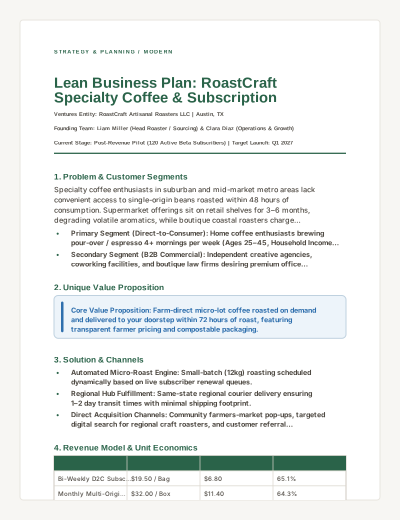
Lean Business Plan
A concise, actionable single-page business model plan covering value proposition, customer segments, channels, unit economics, and milestones.
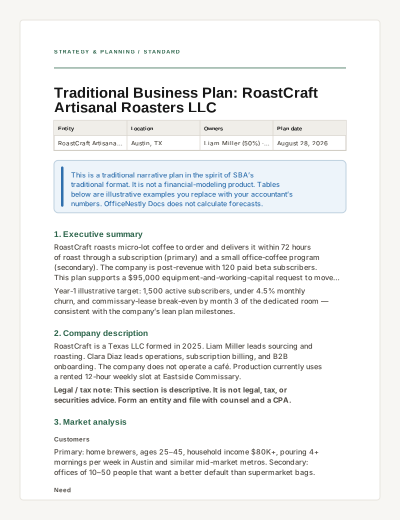
Traditional Business Plan
A comprehensive multi-page business plan structured for bank loans, SBA financing, and formal investor presentations.
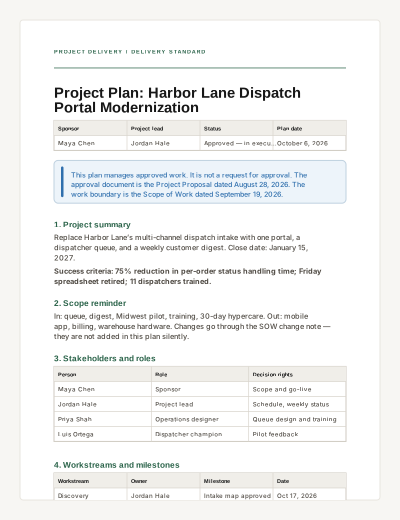
Project Plan
A living plan for approved work: objectives, roles, milestones, risks, cadence, and open decisions.