Lean Business Plan
A lean business plan helps you test and execute your startup idea quickly. Focus on problem-solution fit, revenue models, and concrete milestones.
What's Included
- Ventures Header & Founding Team
- Problem & Customer Segments
- Unique Value Proposition
- Solution & Channels
- Revenue Model & Unit Economics
- Cost Structure & Overhead
- Key Metrics & Milestones
Best For
New venture launches, startup pitching to angel investors, internal corporate innovation projects, and annual strategic planning pivots.
Target Audience
Startup founders, entrepreneurs, small business owners, and innovation team leads.
How to Customize
Replace the RoastCraft coffee example with your business model. Adjust the unit economics table to reflect your pricing tiers and COGS structure.
When to Use
Use a Lean Business Plan when launching a new product, validating a startup idea with co-founders, or presenting to early angel investors before needing a traditional plan.
Full Document Preview
Modern StylePreview the actual editable ZuffSuite document.
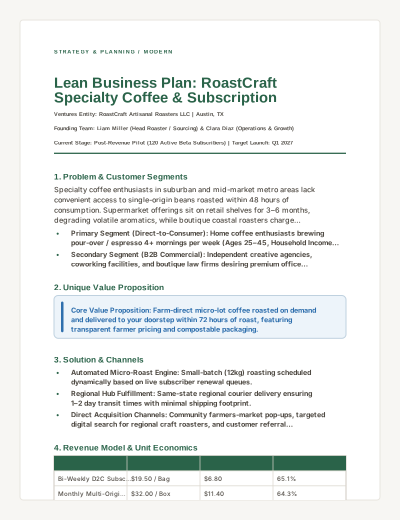
STRATEGY & PLANNING / MODERN
Lean Business Plan: RoastCraft Specialty Coffee & Subscription
Ventures Entity: RoastCraft Artisanal Roasters LLC | Austin, TX
Founding Team: Liam Miller (Head Roaster / Sourcing) & Clara Diaz (Operations & Growth)
Current Stage: Post-Revenue Pilot (120 Active Beta Subscribers) | Target Launch: Q1 2027
1. Problem & Customer Segments
Specialty coffee enthusiasts in suburban and mid-market metro areas lack convenient access to single-origin beans roasted within 48 hours of consumption. Supermarket offerings sit on retail shelves for 3–6 months, degrading volatile aromatics, while boutique coastal roasters charge prohibitive shipping rates ($8–$12 per bag).
Primary Segment (Direct-to-Consumer): Home coffee enthusiasts brewing pour-over / espresso 4+ mornings per week (Ages 25–45, Household Income $80K+).
Secondary Segment (B2B Commercial): Independent creative agencies, coworking facilities, and boutique law firms desiring premium office coffee programs (10–50 employees).
2. Unique Value Proposition
Core Value Proposition: Farm-direct micro-lot coffee roasted on demand and delivered to your doorstep within 72 hours of roast, featuring transparent farmer pricing and compostable packaging.
3. Solution & Channels
Automated Micro-Roast Engine: Small-batch (12kg) roasting scheduled dynamically based on live subscriber renewal queues.
Regional Hub Fulfillment: Same-state regional courier delivery ensuring 1–2 day transit times with minimal shipping footprint.
Direct Acquisition Channels: Community farmers-market pop-ups, targeted digital search for regional craft roasters, and customer referral rewards.
4. Revenue Model & Unit Economics
Product Stream | Price Point | COGS / Unit | Gross Margin |
|---|---|---|---|
Bi-Weekly D2C Subscription (12oz Bag) | $19.50 / Bag | $6.80 | 65.1% |
Monthly Multi-Origin Taster Box (3x 6oz) | $32.00 / Box | $11.40 | 64.3% |
B2B Office Tier (5lb Bulk Dispatch) | $95.00 / Bag | $38.00 | 60.0% |
5. Cost Structure & Overhead
Variable Costs: Green coffee bean sourcing (direct trade FOB), compostable nitrogen-flushed packaging, local courier postage, payment gateway fees (2.9% + 30¢).
Fixed Monthly Overhead: Shared commissary roasting facility lease ($1,800/mo), equipment maintenance ($450/mo), e-commerce platform & analytics software ($280/mo).
6. Key Metrics & 12-Month Milestones
Milestone Target | Target Date | Success KPI |
|---|---|---|
Commercial Platform Launch | Q1 2027 | 350 Paid Active Subscribers |
B2B Corporate Pilot | Q2 2027 | 15 Retainer Office Accounts |
Operational Cashflow Break-Even | Q4 2027 | 1,200 Subscribers ($46K MRR) |
What this document is
A Lean Business Plan is a streamlined, agile document that synthesizes your business model into core hypotheses: problem, value proposition, unit economics, and 12-month milestones.
When to use it
Use a Lean Business Plan when launching a new product, validating a startup idea with co-founders, or presenting to early angel investors before needing a traditional plan.
How to use this ZuffSuite template
Define your target customer segments and problem in section 1. Highlight your value proposition in the callout box. Calculate gross margins in the unit economics table, and set clear quarterly milestones.
Best practices
- Focus on validated customer problems before detailing product features.
- Calculate explicit gross margins for every revenue stream.
- Keep milestones measurable with hard dates and user/revenue targets.
Common mistakes
- Assuming customer demand without testing early pricing.
- Ignoring fixed overhead when calculating runway.
- Treating the plan as a static document instead of updating it monthly.
Related documents
Lean Business Plan vs. Traditional Business Plan
A Lean Business Plan is a fast, 1–3 page living document focused on early validation. A Traditional Business Plan is a formal 10–20 page document used for bank loans and SBA financing. Traditional Business Plan
Lean Business Plan vs. Project Proposal
A Lean Plan designs an entire commercial enterprise. A Project Proposal seeks approval for a specific internal or client work initiative with fixed deliverables. Project Proposal
Questions people actually ask
- Can I use a lean business plan to get a bank loan?
- Most commercial banks and SBA lenders require a Traditional Business Plan with multi-year financial forecasts. A Lean Plan is best for internal alignment, co-founders, and angel investors.
- How often should I update my lean plan?
- Early-stage ventures should review and update their lean business plan monthly or whenever customer discovery reveals new insights about pricing or channels.
Related templates
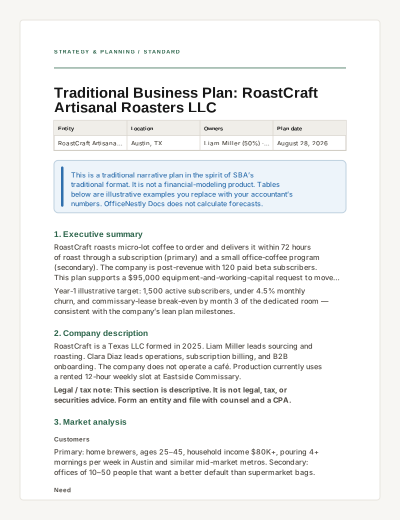
Traditional Business Plan
A comprehensive multi-page business plan structured for bank loans, SBA financing, and formal investor presentations.
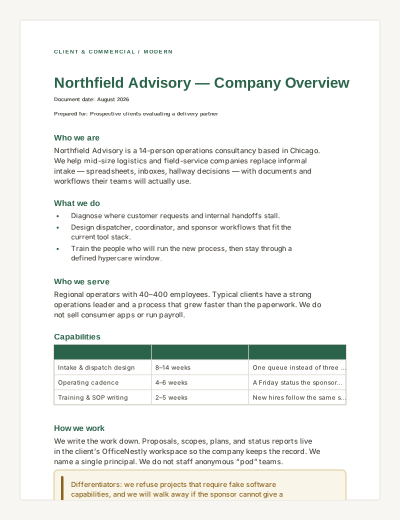
Company Overview
An external-facing company profile covering who you are, who you serve, capabilities, and how to get in touch.
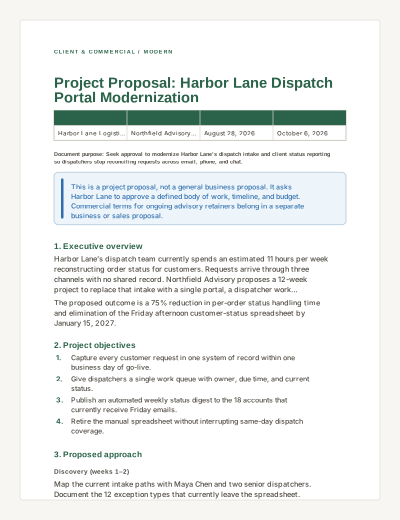
Project Proposal
A structured project proposal outlining objectives, scope boundaries, deliverables, milestones, team roles, and budget for stakeholder approval.